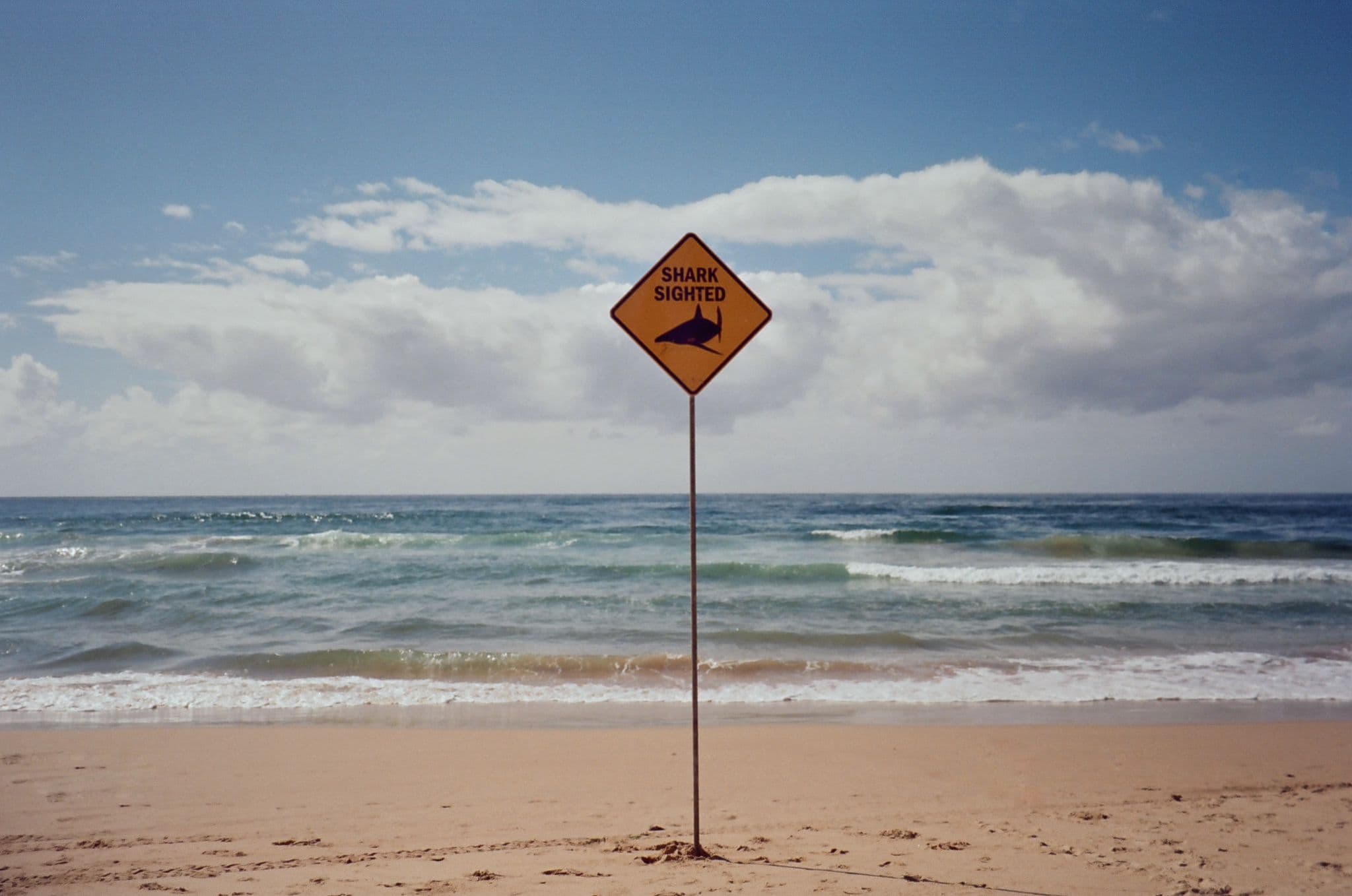
(Multispecies) Justice and Apex Predators: Rethinking Shark Encounters
In 2025, Australia recorded the highest number of fatal shark interactions globally, with five fatalities out of 24 reported incidents (Meagher, 2026). This trend continued into 2026: in January, four separate shark encounters within 48 hours in Sydney left communities shaken and reignited public concern. Such clusters, while statistically rare, attract intense media attention and public anxiety, prompting urgent questions about how to prevent human–shark interactions and ensure human safety.
The ocean may not be a primary human habitat, yet human activity within marine environments has expanded significantly through recreation, tourism, and coastal development. According to Surf Life Saving Australia’s 2025 National Coastal Safety Survey, 5.4 million residents in New South Wales visited the coast an average of 3.7 times per month (SLSA, 2025). This growing human presence is argued to increase the likelihood of shark encounters, particularly in the context of climate change and shifting environmental conditions. In January, for example, extreme weather characterised by heavy rainfall and resulting sewage overflow, paired with unusual baitfish activity, likely contributed to increased shark presence. These incidents not only reflect shifting ecological conditions driven by climate change but also raise questions about how risks are understood and managed.
Over the years, a range of policy measures has been implemented to avoid shark incidents, including shark nets, drumlines, and, in some cases, culling. However, these interventions remain highly contested. Despite their long history, shark nets are often ineffective as risk-reduction tools and instead function to create a perception of safety (Pepin-Neff, 2019). In New South Wales (NSW), shark nets have been used since 1937 and are typically deployed from September to March across 51 beaches, before being removed to allow different species to migrate. Despite seasonal use, the Australian Marine Conservation Society claims that during their 90 years of usage, shark nets and drumlines have caught and killed at least 15,135 other marine animals in NSW alone, including turtles, whales, dolphins, rays, and dugongs (AMCS, 2022). Similarly, in the past, culling practices have been widely criticised for their limited effectiveness and their contribution to the global decline of shark populations.
Ultimately, these policy interventions raise broader ecological and ethical concerns. Sharks are apex predators that play a crucial role in maintaining marine ecosystem balance. They regulate prey populations, supporting the stability of marine food webs. They facilitate nutrient redistribution across ocean ecosystems, including through the breakdown of whale carcasses. Declining shark populations—already observed across the world—risk triggering cascading ecological effects, with potential consequences for biodiversity and human livelihoods. These challenges are further exacerbated by anthropogenic climate change, which is already impacting marine ecosystems and species distribution. In this context, shark encounters emerge not only as isolated incidents but as complex socio-ecological phenomena that expose tensions between human safety, environmental governance, and the intrinsic value of more-than-human life. Framed in this way, shark encounters challenge more than existing policies: they call into question the very terms on which justice is defined. Multispecies justice emerges as one way to rethink those terms.
Multispecies justice (MSJ) is both a theory and practice of justice that challenges anthropocentric frameworks by rejecting the individual human subject as the sole or primary unit of moral concern. Instead, it questions hierarchical frameworks that privilege human life over more-than-human beings, including philosophical traditions that ground moral status in criteria such as intelligence, agency, sentience, or self-awareness (Celermajer et al., 2025). Inspired by Indigenous, feminist and decolonial studies, MSJ advances a critique of the underlying metaphysical assumptions about the separation between humans and “nature.” Decolonising justice requires rethinking existing frameworks and ensuring that theories are articulated and institutionalised in ways that accommodate a plurality of (human) worldviews. This includes recognising perspectives for which distinctions central to Western thought, such as sentience or even life, are neither decisive nor meaningful. For Aboriginal and Torres Strait Islander peoples, sharks carry deep cultural and spiritual significance: they are understood as creator beings, ancestors, and totems. Indigenous art, music, and storytelling convey rich and diverse understandings of sharks, offering perspectives that differ markedly from dominant Western narratives (Allam, 2015). Indeed, limiting justice to individual humans, or even to the most sentient animals, is both ecologically reductive and epistemically colonising. MSJ offers a way forward by reorienting attention from isolated individuals to the relationships that sustain shared worlds.
Building on this shift, MSJ recognises more-than-humans as subjects of justice, while acknowledging that the responsibility to enact justice remains a human one. It also foregrounds the difficulty of navigating competing claims within an expanded community of justice, where interests do not always align. Rather than simply extending existing models, it proposes a more fundamental shift: a relational ontology in which beings—human and more-than-human alike—are constituted through their relationships. From this perspective, justice is not primarily about isolated individuals, but about the ecological and social relations that enable different beings to flourish.
Scholars have proposed a range of institutional mechanisms to represent non-human interests within human governance systems, exploring models of multispecies cohabitation based on different forms of membership and rights. These include appointing human representatives or advocates for animals, enabling citizen deliberation on animal-related issues, and even introducing electoral reforms to support animal-focused political parties (Magaña, 2022). Other approaches extend representation beyond animals to ecosystems and abiotic entities, such as the “Council of All Beings” (Seed et al., 2007), participatory practices that invite humans to speak from the perspective of other life forms, or legal innovations such as granting rights to nature (Gray & Curry, 2020). Overall, multispecies practices—such as intentional multispecies communities, experimental “parliaments,” and artistic forms of multispecies world-making—offer innovative approaches to deliberative inclusion. They represent a genuine, though still evolving, commitment to foster multispecies solidarity.
However, these approaches tend to rely on forms of representation and institutional inclusion that presume relatively stable subjects, interests, and spaces of governance. Their applicability becomes less certain in highly dynamic and open ecosystems such as the ocean. Species like sharks do not inhabit fixed territories and cannot be easily incorporated into stable models of representation or governance. This does not signal a limit of multispecies justice as such, but rather points to the need to foreground its relational dimension. From this perspective, multispecies justice is not only about representation, but about the ongoing, context-specific negotiation of coexistence, shaped by care, conflict, and compromise (Fry et al., 2024). This focus highlights both the agency of more-than-human beings, such as predators, and the socio-ecological realities of the human communities that live alongside them. Fundamentally, the emphasis on situated, relational ethics underscores the need to address both the agency and autonomy of apex predators and the socio-ecological realities of the human communities sharing space with them. Rather than focusing primarily on the codification of rights, multispecies justice thus becomes a practice of cultivating ecological resilience while navigating the ethical tensions inherent in shared spaces.
Yet sharks are not only encountered in the water: they exist in the imagination. Public understandings of sharks are far from neutral; they are shaped by powerful cultural imaginaries. The media has long portrayed sharks as dangerous, intentional predators, reinforcing the image of the shark as a malevolent force. Even the language used, including expressions like “shark attack”, tends to imply intentionality and fatality, regardless of the actual circumstances (Pepin-Neff, 2019). This narrative persists despite a lack of scientific evidence supporting the idea of the “rogue shark” deliberately targeting humans. Empirical research consistently shows that humans are not typical prey. Most shark bites are considered exploratory, often attributed to mistaken identity. Survival rates are high, and many incidents involve a single, non-repeated bite, described as “hit-and-run” encounters (Caldicott et al., 2001).

Nevertheless, fictionalised representations continue to shape public perception. The so-called “Jaws effect” (Neff, 2015) illustrates how cinematic portrayals, most notably the Hollywood blockbuster Jaws, have contributed to enduring fear and hostility towards sharks, influencing both public opinion and policy responses. Such portrayals contribute to a distorted understanding of shark behaviour, reinforcing demand for visible and immediate risk-management measures. Crucially, these imaginaries do not operate in abstraction but are embedded within specific spatial contexts. Nowhere is this more evident than at the beach, where competing imaginaries and ecological realities meet.
In Australia, beach culture has been extensively documented across film, literature, sound, and visual art since the late nineteenth century, reflecting its centrality in the national imagination. Yet, this cultural formation is historically contingent. Daytime public bathing, for instance, was widely prohibited until the early twentieth century, when restrictions gradually began to lift. What is now perceived as a “natural” and timeless practice was, in fact, socially regulated and contested (Clark, 2026). Over time, the beach became a defining feature of Australian national identity, closely tied to ideals of leisure and health. This transformation was actively supported by state policies and collective efforts, including surf lifesaving institutions and community initiatives, which sought to render the beach a safe and accessible space for the public. However, this narrative of inclusivity obscures more complex and exclusionary histories. Scholars have also framed the beach as a colonised space, shaped by settler colonial logics that displaced Indigenous relationships to coastal environments and redefined them within a Eurocentric framework (Hammerton & Ford, 2018; O’Keeffe, 2024). Practices such as “localism” further complicate the notion of the beach as universally accessible, revealing how belonging and exclusion continue to be negotiated along social and cultural lines. Artistic interventions, such as those of Sydney-based artist Anne Zahalka, critically engage with these tensions by interrogating the mythologies surrounding the beach and its communities (Zahalka, 2026). Drawing on earlier visual traditions, her work unsettles familiar images of the beach, exposing it as a space shaped as much by myth as by lived experience. In doing so, it highlights the constructed nature of the beach as an emblem of national identity, inviting reflection on whose presence is normalised—and whose is excluded—within this space.

In this sense, the beach is not a neutral setting, but a socio-cultural space where histories, identities, and power relations are sedimented. In the same way, it can also be understood as a site where multispecies encounters—such as those between humans and sharks—are shaped by expectations of safety, control, and human priority. As Professor Pepin-Neff (2019) argues, measures such as shark nets are often implemented less to eliminate risk than to manage public perception. These interventions function symbolically, producing an impression of safety rather than delivering a substantial reduction in danger. If both the imaginaries of sharks and the beach are shaped by cultural and political processes, then the question is no longer how to manage risk, but how to rethink the relationships that structure these encounters. At stake is not only how we manage encounters with sharks, but how we define the boundaries of our moral and political community. Current approaches are often grounded in an anthropocentric framework that prioritises human leisure and safety over the ecological needs of other species. Zan Hammerton and Akkadia Ford (2018) critique how the assumed “right” to recreation and leisure at the beach reflects a broader colonial logic, in which human presence and control are normalised at the expense of more-than-human life. Within this framework, policies risk enacting a form of epistemic colonisation, imposing (specific) human priorities onto ecosystems. In doing so, they ignore other ways of relating to nature, including First Nations worldviews. From this perspective, the assumption that human access to coastal spaces should take precedence over a species’ right to its habitat becomes ethically problematic.
Multispecies justice invites a different orientation. Rather than seeking to eliminate risk, it calls for an acknowledgment of ecological limits and a willingness to adapt human behaviour. This may include recognising the seasonality of marine life, adjusting patterns of ocean use, and accepting that coexistence entails a degree of unpredictability. In this sense, justice is not achieved through total control and annihilation of another species, but through negotiating shared spaces in ways that respect both human and more-than-human forms of life. Importantly, this shift also requires confronting the cultural biases that shape our responses to sharks. The persistent framing of sharks as antagonists has contributed to their symbolic and material criminalisation, legitimising practices such as culling or targeted hunts. Counter-narratives, such as conservation campaigns, are fundamental in highlighting the ecological importance of sharks and seek to reframe them as integral components of marine ecosystems rather than existential threats.
New technologies are also beginning to reshape how these relationships are negotiated in practice. The use of drones, combined with advances in image recognition and deep learning, enables real-time monitoring of marine environments. Systems such as SharkSpotter can analyse live video feeds with high levels of accuracy, distinguishing sharks from other marine species while also identifying human activity in the water (Sharma et al., 2022). When a shark is detected, drones can track its movement, alert lifeguards, and support targeted interventions, such as evacuating swimmers or deploying flotation devices. In practice, this enables a more responsive and situational approach to risk management: beaches may be temporarily closed, warnings issued, and surveillance intensified, before being reopened once the perceived threat has passed. Compared to static and often ecologically harmful measures, such as nets or culling, these approaches offer more adaptive and less invasive alternatives. Crucially, technology also transforms how sharks are perceived. The aerial perspective offered by drones renders shark presence visible and interpretable, shifting the encounter from one defined by fear of the unseen to one mediated through observation and knowledge. Although increased visibility may amplify perceptions of risk, especially as drone footage circulates widely through media and social platforms, it can also foster a more informed and less sensationalised understanding of shark behaviour.
From a multispecies justice perspective, these developments are significant. By enabling more precise, non-lethal, and adaptive responses, these technologies open possibilities for rethinking human–shark relationships beyond control and exclusion. They can support a model of coexistence grounded in monitoring, responsiveness, and an acknowledgment of shared, dynamic environments. Importantly, coexistence does not imply the absence of conflicts or discomfort. Sharing spaces inherently entails frictions and disagreements; only a totalitarian, top-down approach, rooted in supremacy and eradication, could eliminate the emergence of conflicts. A multispecies account focuses on embodied, earthly, multispecies practices of care, through which ethical commitments to more-than-humans emerge from situated acts of learning from them.
While human–shark encounters can be deeply tragic, they should not be understood solely as failures of control, but as moments of contact within shared ecological worlds. Recognising this also means extending care to those who experience these encounters firsthand. As Dave Pearson, a shark bite survivor and founder of Bite Club, a support group and non-profit for survivors of apex predator incidents, has shown, recovery is not only physical but deeply emotional. Through his work, he supports others in navigating the trauma, isolation, and long-term psychological effects that often follow such incidents (Chenery, 2024). To rethink human–shark relationships, then, is not only to move beyond fear-based narratives about sharks, reframing the beach as a site of multispecies encounters, but also to cultivate more compassionate ways of responding to those affected by these encounters. Multispecies justice is not about choosing between human and non-human life, but about fostering forms of coexistence that recognise vulnerability, interdependence, and care across species boundaries.
References
Allam, L. (2015, September 24). Indigenous cultural views of the shark. ABC.
Australian Marine Conservation Society. (2022, July 27). One turtle killed every twelve days on NSW coast by shark nets in the past year, new data reveals.
Caldicott, D. G. E., Mahajani, R., & Kuhn, M. (2001). The anatomy of a shark attack: A case report and review of the literature. Injury, 32(6), 445–453.
Celermajer, D., Burke, A., Fishel, S., Fitz-Henry, E., Rogers, N., Schlosberg, D., & Winter, C. (2025). What is multispecies justice? In Institutionalising Multispecies Justice. Cambridge University Press.
Chenery, S. (2024, September 17). The first rule of Bite Club? Survive an attack by an apex predator. The Guardian.
Clark, A. (2026, February 9). Australian Geographic.
Fry, T., Marino, A., & Nijhawan, S. (2024). ‘Killing with Care’ Locating Ethical Congruence in Multispecies Political Ecology.
Gray, J., & Curry, P. (2020). Ecodemocracy and Political Representation for Non-human Nature. In Conservation: Integrating social and ecological justice (pp. 155–166). Springer.
Hammerton, Z., & Ford, A. (2018). Decolonising the Waters: Interspecies Encounters Between Sharks and Humans. Animal Studies Journal, 7(1).
Magaña, P. (2022). The Political Representation of Nonhuman Animals. Social Theory and Practice, 48(4), 665–690.
Meagher, P. (2026). Australian Shark Incident Database. Zenodo.
Neff, C. (2015). The Jaws Effect: How movie narratives are used to influence policy responses to shark bites in Western Australia. Australian Journal of Political Science, 50(1), 114–127.
O’Keeffe, P. (2024). The Beach and the Australian Imaginary. In Power, Privilege and Place in Australian Society(pp. 55–76). Springer Nature.
Pepin-Neff, C. L. (2019). The Rise of Shark “Attack” Discourse. In Flaws: Shark Bites and Emotional Public Policymaking (pp. 13–38). Springer.
Seed, J., Macy, J., Fleming, P., & Naess, A. (2007). Thinking Like a Mountain: Towards a Council of All Beings. New Society Publishers.
Sharma, N., Saqib, M., Scully-Power, P., & Blumenstein, M. (2022). SharkSpotter: Shark Detection with Drones for Human Safety and Environmental Protection. Springer.
Surf Life Saving Australia. (2025). National Coastal Safety Report.
Zahalka, A. (2026). Anne Zahalka [Artist portfolio]. Zahalka World.
© Elisa Paiusco. All rights reserved. This content may not be reproduced, distributed, or reused without the author’s written permission.